Category Archives: OUR BEST POSTS

* A place to begin

John 9:1-3:

1As he walked along, he saw a man blind from birth. 2His disciples asked him, “Rabbi, who sinned, this man or his parents, that he was born blind?” 3Jesus answered, “Neither this man nor his parents sinned; he was born blind so that God’s works might be revealed in him.”

The disciples want to place blame. Their posture can be referred to as fault-finding, judgment and condemnation. Jesus calls attention to the opportunity to heal, to do good, to make a beginning.

Continue reading * A place to begin

* “Son”

I don’t like Elder Conrad.

At the shelter, they compel us to attend chapel every night. A different group presents each night, following a monthly rotation. Elder Conrad and his group come the second Sunday of each month. In nigh on four years, he’s never said a single thing I felt merited attention.

There is one exception.
Continue reading * “Son”

* Guides to Straight Thinking

Guides to Straight Thinking, by Stuart Chase

Life is difficult.

At this writing, I notice that perhaps a dozen times a day I encounter some fact or situation that I disapprove of, and more than disapprove of; I respond to it as if it ought not to have occurred, as if it ought not be possible in the real world.

In such situations, rather than deal with the facts as they are, human beings are inclined to make up excuses as to why the thing ought not be so, and then have one’s attention cling to the excuses rather than the facts.

At this point, one is no longer thinking straight.

This accounts for a tremendous amount of the confusion and drama we see in discussions of social issues and politics: “we” cling to “our” excuses, “they” cling to “their” excuses, and nobody is dealing with the facts

— with what is —

— with life.

In Guides to Straight Thinking, Stuart Chase examines thirteen of the most common patterns of excuses, or “fallacies.”   Clearing away these self-deceptions will make it easier to solve problems not just in politics, but also on the job, in the ‘hood, and in the home.

This book is square on with the goals of The William Tell Show.  I highly recommend it; which is why I’ve made it available here.

Guides to Straight Thinking, by Stuart Chase

Reblogged 2020-07-23.

* “Acting White”

‘Acting White’

Against the notion that blacks victimize themselves by “acting black,” Princeton undergraduate Kristen Coke complains that “acting white” does not insulate her from petty racist insults. After all, she doesn’t act “ghetto.”

I’m not concerned about victimizations that occur when blacks “act white” in the presence of whites. In my world, there aren’t enough white people to matter. I’m concerned about the victimizations that occur when black people “act black” among blacks.

Continue reading * “Acting White”

* Jeanette

Jeanette is a pleasant, demented homeless woman who frequents St. Paul Plaza and the library.

She’s always immaculately dressed. I don’t know how she manages that.

One day, I think in May, walking through St. Paul Plaza, on impulse I approached her and asked if she’d sell me a cigarette. (At that time, I was buying “loose ones.”) Instead, she gave me three Newports.

Related:  Practical advantages of being a nice guy

And she’s done the same thing again almost every day since.

She’ll cross the street in the rain to bring me three Newports.

On the one hand, I’ve pondered whether I’m taking advantage of her.  It seems instead that it’s a blessing to her to be able to do this for me.

On the other hand, you don’t want to have a conversation with her.  She has a long, long list of public figures whose scandals and deaths she says have been blamed on her.

I am tempted to wish I knew the karmic basis of schizophrenia, that I might pray for her more effectively.  But I need to use the tools I have.

God bless Jeanette, and heal her; in this life, or the next.

(Reblogged 2020-04-30.)
* Reducing our carbon footprint – by design

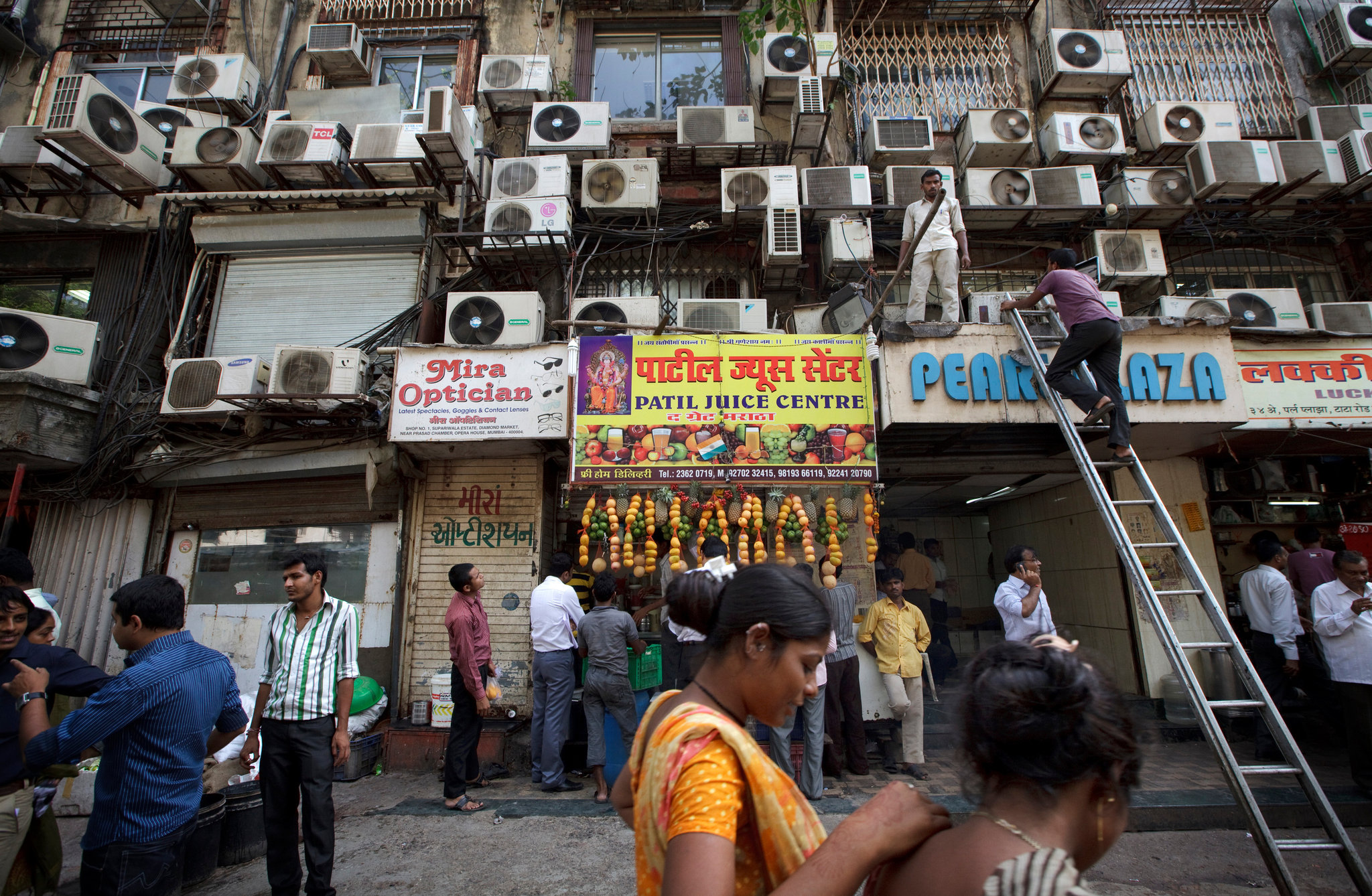
I don’t hold with those who want to blame global warming wholly on American industry and American cars.  The slashing-burning of hundreds of square miles of Amazon rain forest each day, and the air pollution in Mexico City and Beijing, show the need for a global response.

There are two principal ways human beings can reduce greenhouse gases:  (1) covering more land with green plants that will consume carbon dioxide from the air; and (2) reducing our carbon dioxide emissions.

Some simple considerations of architecture address both concerns.

Continue reading * Reducing our carbon footprint – by design

* Does McDonald’s discriminate against the homeless?

  UPDATES APPEAR IN THE COMMENTS.  

Blogging experts tell us to give our posts dramatic titles. I might not tell the story at all, but on the one hand there is an expectation that (though I seldom do) a homeless blogger will tell about the difficulties homeless people face.  On the other hand, it provides occasion for me to set forth William Tell’s current approach to injustice.

It will also let me model the principles of Free Speech Handbook.

This concerns an incident of October 7, 2014.
Continue reading * Does McDonald’s discriminate against the homeless?

* Life in the outer darkness

The appointed Gospel text for Sunday was Matthew’s Parable of the Wedding Banquet, Matthew 22:1-14.

I was struck by verses 11-14 —

11“But when the king came in to see the guests, he noticed a man there who was not wearing a wedding robe, 12and he said to him, ‘Friend, how did you get in here without a wedding robe?’ And he was speechless. 13Then the king said to the attendants, ‘Bind him hand and foot, and throw him into the outer darkness, where there will be weeping and gnashing of teeth.’ 14For many are called, but few are chosen.”

— in that, last Tuesday at McDonald’s, I’m the one who got thrown into the outer darkness.
Continue reading * Life in the outer darkness